 11
11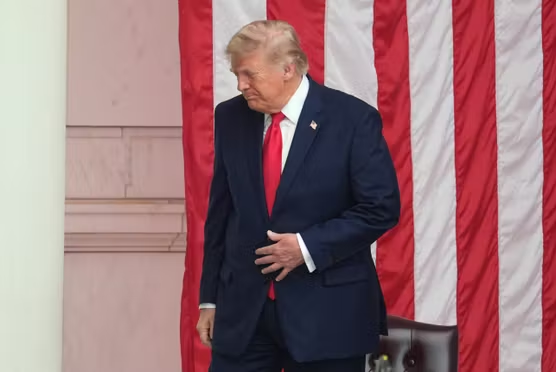
The political fortunes of U.S. President Donald Trump and Reform UK leader Nigel Farage are facing renewed scrutiny as both confront questions over whether the populist politics that propelled them to prominence can translate into effective governance.
My analysis argues that both politicians have demonstrated a strong ability to channel public frustration, attract media attention and portray themselves as challengers to an established political order. However, it contends that their records in government and parliament reveal significant limitations when it comes to delivering practical and lasting solutions to the problems that fuel public dissatisfaction.
Farage’s return to the UK Parliament followed a by-election in Clacton, a constituency where he enjoys strong support. The contest was unusual because the major political parties did not field candidates, while satirical candidate Count Binface emerged as Farage’s principal challenger. Despite winning the seat, Farage faced criticism after declining to attend the official declaration of the result.
The episode has also revived scrutiny of financial questions surrounding Farage, including an investigation into an undeclared £5 million gift. The parliamentary inquiry is expected to continue despite his electoral victory, potentially creating further political difficulties for the Reform UK leader.
The broader argument centres on the distinction between protest politics and governing. Populist leaders can often capitalize on dissatisfaction by offering simple explanations and promising to challenge powerful institutions. Yet governing requires sustained policy work, institutional cooperation and the ability to address complex economic and social problems over time.
Trump’s presidency provides a prominent example of this tension. According to the Guardian analysis, economic pressures, including inflation and higher fuel prices, have undermined some of the promises associated with his political campaign. The article also argues that the U.S. military intervention against Iran has produced consequences that complicate Trump’s claims of strategic success.
The conflict has contributed to higher oil prices and placed additional pressure on economies exposed to disruption in the Middle East. The article maintains that Trump’s tendency to announce rapid breakthroughs contrasts with the lengthy negotiations and detailed diplomacy required to secure durable agreements.
Farage’s political approach has similarly relied heavily on confrontation with what he describes as the political establishment. His appeal has been strengthened by public dissatisfaction over immigration, economic pressures and distrust of mainstream parties. However, the strong performance of Count Binface in the Clacton contest was interpreted as evidence that a portion of voters were willing to use the election to express dissatisfaction with Farage and the political system more broadly.
The comparison between Trump and Farage ultimately highlights a wider challenge for populist movements: winning elections by exploiting public anger is different from addressing the underlying causes of that anger. Both leaders have built political identities around challenging the establishment, but their critics argue that effective government demands more than rhetoric, political theatre and highly visible confrontation.
The debate is likely to remain significant as voters assess whether populist movements can move beyond protest and deliver measurable improvements in economic conditions, public services, national security and political accountability.