 11
11
Washington: Republican lawmakers on Capitol Hill have expressed uncertainty and skepticism over a newly announced agreement between the United States and Iran, saying they require more detailed briefings from the White House before the deal is finalized.
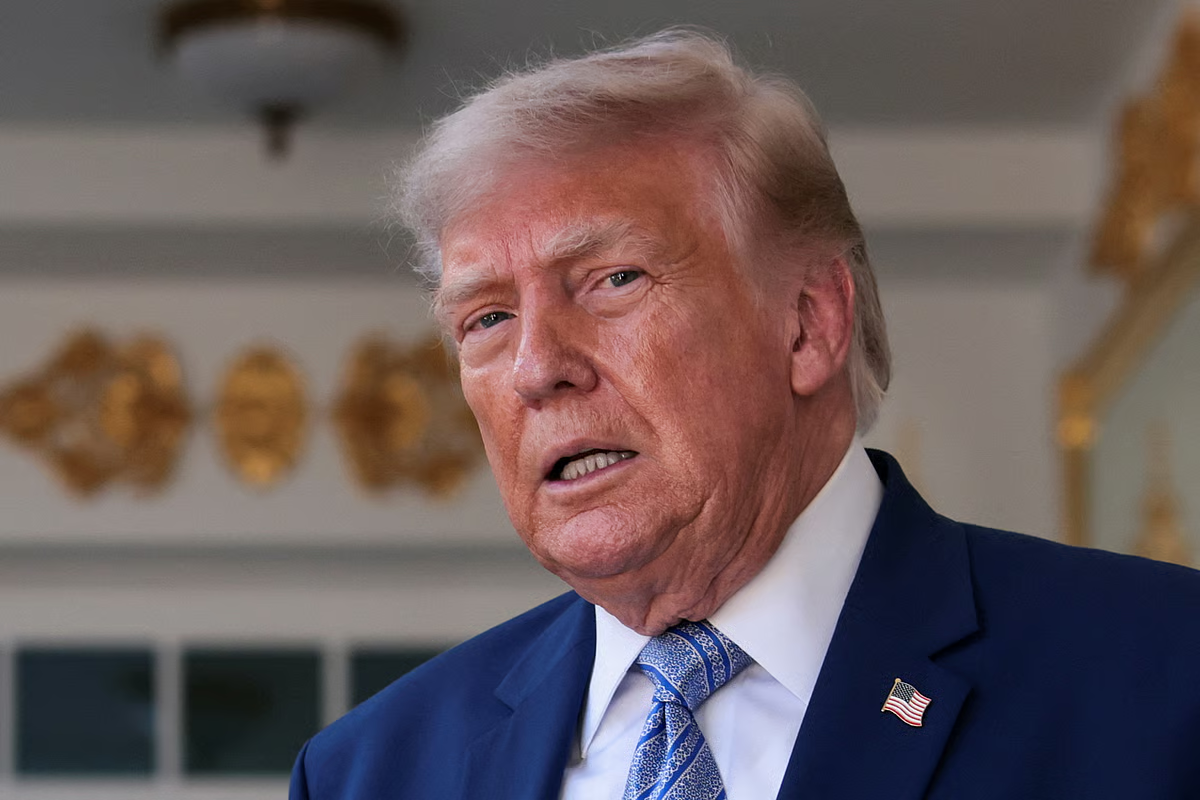
The agreement, announced on Sunday by U.S. President Donald Trump, aims to end hostilities involving Iran and is expected to be formally signed in a ceremony on Friday in Geneva. Key elements reportedly include reopening the Strait of Hormuz, lifting the U.S. naval blockade in the region, and providing financial incentives to Iran contingent upon compliance with certain benchmarks.
However, lawmakers from both major parties said significant details remain unclear.
“I just don’t know enough about it,” Senate Majority Leader John Thune told reporters, adding that even well-informed members of Congress had not been fully briefed. He also raised concerns about enforcement and compliance mechanisms within the agreement.
His concerns were echoed by Senator Thom Tillis, who questioned the transparency of the arrangement, stating, “If it’s a secret deal then how can I take it seriously?”
Vice President JD Vance told ABC News that the administration plans to release the text of the agreement this week, emphasizing that Iran would only receive financial benefits if it fulfills its obligations under the deal.
According to senior U.S. officials, the memorandum of understanding includes the potential release of frozen Iranian assets, sanctions relief, and the establishment of a $300 billion reconstruction fund for Iran, provided Tehran meets agreed-upon conditions. However, the full document has not yet been made public.
Senators also questioned how Iran’s nuclear program would be verified and who would oversee the removal or destruction of highly enriched uranium allegedly stored at damaged nuclear facilities. Senator John Kennedy said he remained cautious, noting that verification and independent inspections would be essential for any credible agreement.
Senator Lindsey Graham also urged Congress to review and vote on the deal, stating that while he is “pulling for a deal,” lawmakers must see the full memorandum before forming conclusions.
Under the Iran Nuclear Agreement Review Act, Congress has the authority to review agreements related to Iran’s nuclear program, though submission is not automatically guaranteed. A similar process was used for the 2015 Joint Comprehensive Plan of Action (JCPOA) under former President Barack Obama, which was subject to a congressional vote of disapproval but ultimately remained in place.
As debate continues in Washington, lawmakers from both parties say they are awaiting further clarification before taking any legislative or political position on the emerging agreement.