 11
11
WASHINGTON: Tensions between the United States and Iran intensified on Tuesday after U.S. President Donald Trump announced the reinstatement of a naval blockade on all Iranian ports and warned of expanded military action unless Tehran returns to negotiations over the ongoing conflict.
The latest escalation comes as U.S. forces launched a new wave of strikes targeting Iranian military capabilities that Washington says have been used to attack commercial shipping in the Strait of Hormuz, one of the world’s most strategically important energy transit routes.
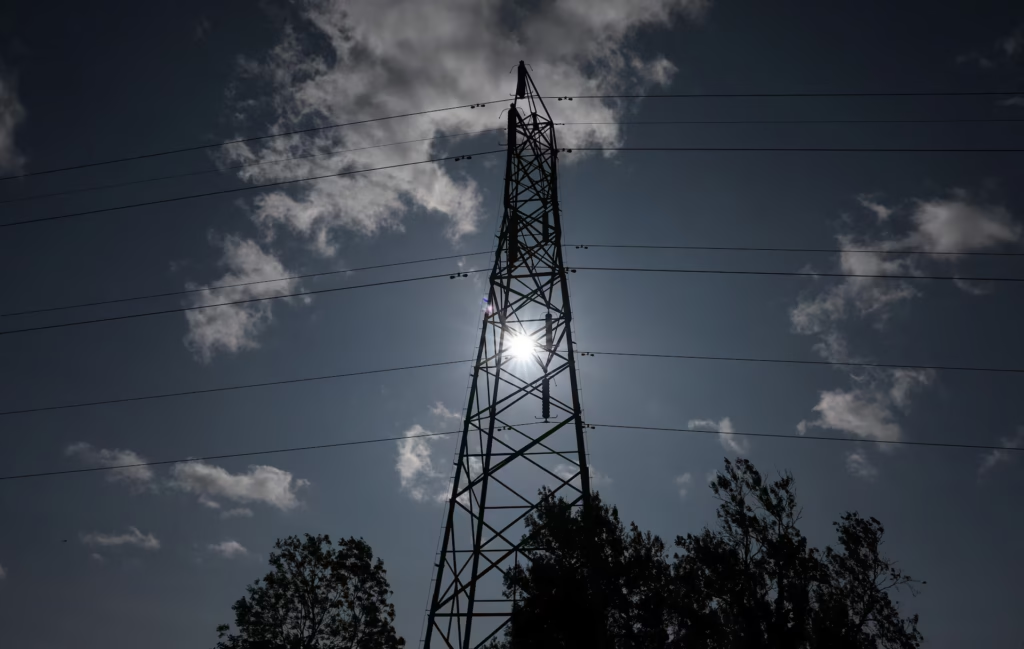
Speaking in an interview with Fox News, President Trump said the United States could target Iran’s power plants, bridges and other critical infrastructure next week if Iranian authorities fail to resume diplomatic talks.
“We’re going to knock out all their power plants. We’re going to knock out all their bridges unless they get to the table and negotiate,” Trump said, signaling a further escalation of U.S. military pressure.
The U.S. military said the renewed strikes are intended to further degrade Iranian capabilities used in attacks on commercial vessels transiting the Strait of Hormuz. The blockade is aimed at restricting maritime access to Iranian ports while protecting international shipping routes.
Iran’s Islamic Revolutionary Guard Corps (IRGC) condemned the U.S. actions and reiterated its threat to keep the Strait of Hormuz closed, while also warning that additional regional energy corridors could be targeted if hostilities continue. Tehran has accused Washington of escalating the conflict through military aggression.
The exchange of military actions has heightened concerns over global energy security, with renewed fears of disruptions to oil exports from the Gulf region contributing to higher crude oil prices in international markets. Analysts warn that continued escalation could have significant economic and geopolitical consequences beyond the Middle East.