11
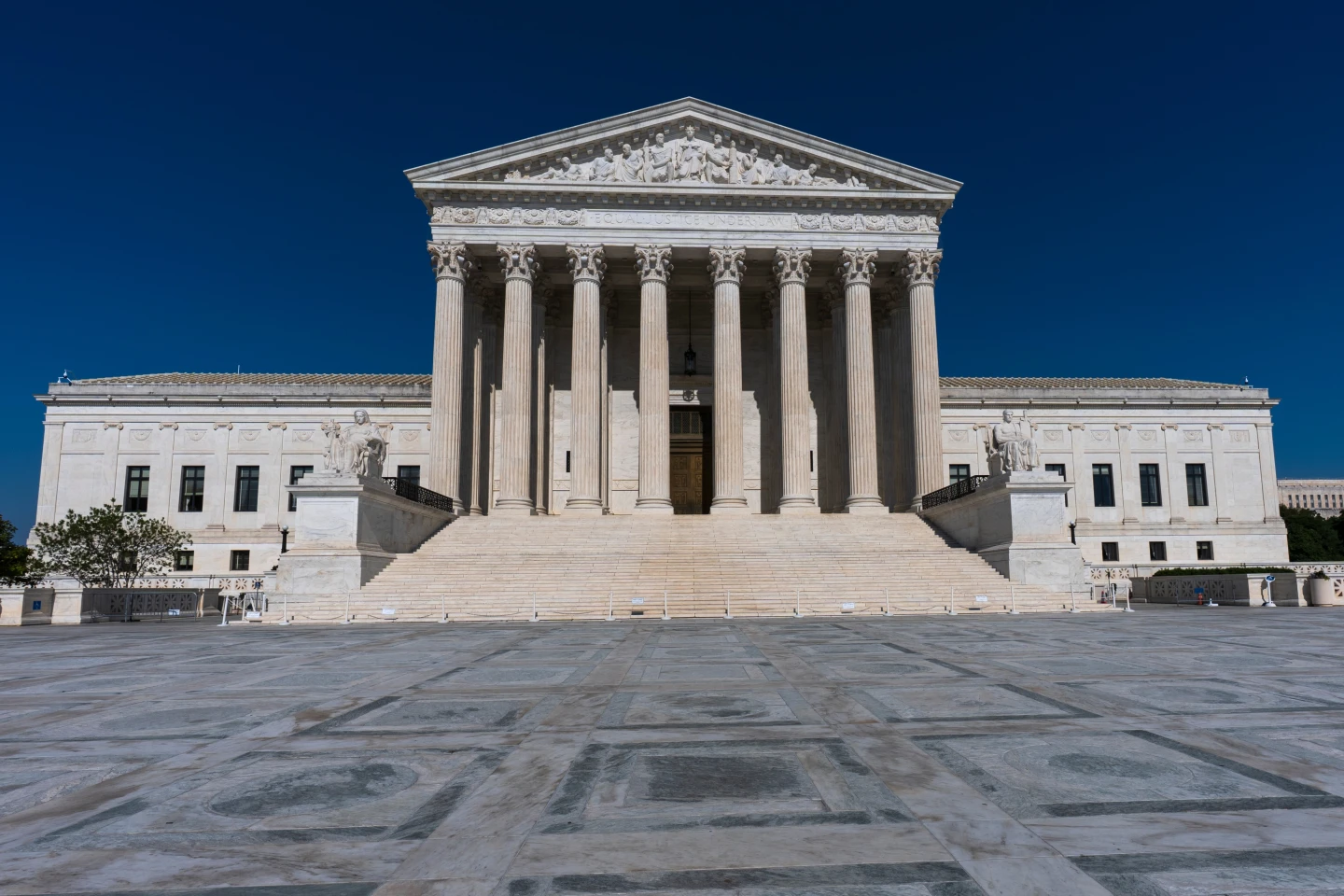
Washington: The US Supreme Court on Monday swiftly turned down a request by President Donald Trump’s administration to temporarily stop California from counting mail-in ballots cast by more than 20,000 registered voters whom federal officials allege are likely not US citizens, delivering its decision on the eve of the midterm elections.
The justices denied the Justice Department’s emergency application only hours after it was submitted, ending the administration’s challenge over the disputed ballots, which could have affected thousands of voters and created uncertainty over election outcomes. The ruling marked another setback for President Trump as Republicans seek to retain control of Congress in Tuesday’s vote. California, the most populous US state, is a Democratic stronghold.
The Court’s one-sentence order offered no explanation, as is customary in emergency matters, and no justice publicly dissented. The Court also did not ask California to file a response, a step that typically indicates the justices are giving an emergency application serious consideration. A federal appeals court had already rejected the administration’s request on Friday.
California Governor Gavin Newsom, a Democrat, welcomed the decision, calling it “a welcome sight for all Americans given the disgusting and dangerous attacks on our democracy by the federal government.” He added: “Tomorrow (Tuesday), Californians can feel secure in knowing the state will carry out a free and fair election — just as we’ve always done.”
Administration’s Position
The administration had sought to require California to keep the allegedly unlawful ballots apart from all others and to withhold them from the count until the voters’ citizenship had been verified. In its filing to the Supreme Court, the Justice Department argued: “Once California commingles the challenged ballots with lawful ones, there is no way to get the challenged ballots back.”
Acting US Deputy Attorney General Trent McCotter said in a social media post following the filing that the administration would “continue pursuing every available legal avenue to protect the integrity of our elections and ensure federal law is enforced.”
The administration stepped up its focus on alleged non-citizen voting in the lead-up to the midterms, although numerous studies and state audits have found that voting by ineligible individuals, including non-citizens, is rare. President Trump has made false claims of widespread voter fraud in the United States, including in connection with the 2020 election he lost to Democrat Joe Biden.
Constitutional Questions
Under the US Constitution, responsibility for administering elections rests with the states, with limited federal oversight. The lawsuit represented an unusual instance of federal intervention in the voting process and indicated the administration’s readiness to challenge election results in the courts.
The administration had earlier attempted to restrict mail-in voting, a method more commonly used by Democratic-leaning voters, but that effort was rejected by the Supreme Court in September. On Sunday, a federal judge also dismissed the administration’s lawsuit relating to the US Senate race in Alaska.
The list of 20,000 registered voters was compiled by the US Department of Homeland Security and forwarded to state officials in California and to officials in Los Angeles County. The Justice Department filed suit in federal court on October 15, alleging that California was unlawfully obstructing enforcement of a 1996 federal law that makes voting by non-citizens in federal elections a criminal offence. The department contended that the state’s conduct violated the Constitution’s Supremacy Clause, under which federal law generally takes precedence over state law.
California maintained that its protections against non-citizen voting are strong and that the lawsuit risked stripping 20,000 people of their voting rights on the basis of vague allegations. In court filings, the state argued that the federal government’s method for screening voter rolls to identify non-citizens was flawed and likely contained numerous errors.
California holds 52 seats in the House of Representatives, the most of any state. Democrats require a net gain of four seats to secure a majority in the chamber.
Lower Courts Rule Against Administration
US District Judge David Carter in Los Angeles rejected the administration’s request on October 28. “Never before in American history has the federal government, on the eve of an election, sought to coerce a state and local government to abandon their own constitutional elections procedures and bend to the will of the executive branch,” Judge Carter wrote.
The judge also questioned the reliability of the federal data, pointing out that individuals recently identified by the federal government as non-citizens on voter rolls in other states had repeatedly been found to be naturalised US citizens. “If the executive can discount votes and threaten an ongoing election due to unproven allegations, then our democracy is in danger,” he wrote.
On Friday, the San Francisco-based 9th US Circuit Court of Appeals likewise declined to block the ballots, underscoring the state’s authority over electoral procedures and pointing to California’s comprehensive legal framework for safeguarding election integrity, including a mechanism for cancelling the registration of any voter shown to be ineligible.