 11
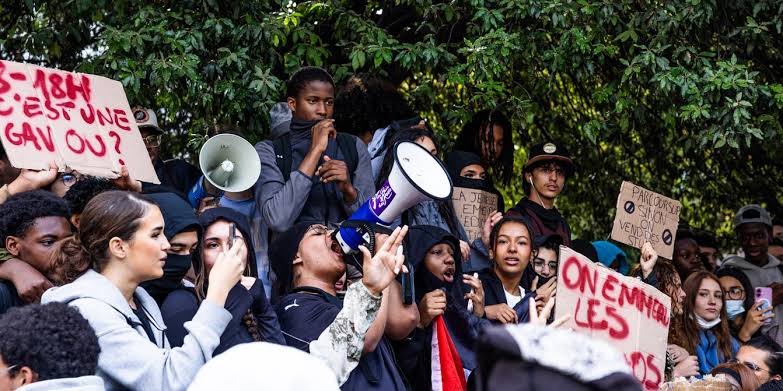
A nationwide revolt by high-school students over crumbling classrooms has been met with riot police, grenades and mass arrests. The response says more about the French state than about its teenagers.
For much of October, France has watched an unusual kind of uprising. Its leaders are not trade unionists, farmers or pension-reform opponents but teenagers, high-school students who have blockaded their lycées, marched through city centres and demanded something strikingly modest: decent conditions in which to learn. Their grievances are concrete and widely documented. Classes go without teachers for weeks because substitutes cannot be found. Timetables are overloaded. Buildings are dilapidated, and many become unbearable as summers grow hotter. Students blame years of underinvestment, and teachers’ unions and parents’ associations have largely joined them.
What has turned a protest about school funding into a national controversy is the way the state has answered it.
From blockades to battle lines
The movement spread rapidly from early October. Clashes with CRS riot police were reported outside schools in Toulouse, Rennes, Aubervilliers and Paris, and by October 6 the High School Students Union said close to 2,000 lycées had been blockaded or closed in a single day. Prime Minister Sébastien Lecornu then suspended high-school classes across the country for the rest of that week, presenting the move as a chance for headteachers, staff and pupils to settle their concerns through internal dialogue, while warning that setting fire to a school does nothing to repair school buildings.
The human cost has been severe. In the former mining town of Lens, a 15-year-old lost his hand and part of his arm after picking up a police grenade. In Tours, prosecutors are investigating whether a police riot-control round partially blinded a 16-year-old. Beyond these injuries, large-scale arrests of minors and tactics that human rights campaigners call disproportionate have become a defining feature of the crisis. One student in Lille described the policing as extremely violent repression that only deepens pupils’ anger.
The column’s central charge
It is against this backdrop that Rokhaya Diallo, writing in the Guardian, makes a pointed argument: French schoolchildren have been treated like violent criminals for telling the truth about their schools. In her framing, the students’ protest is entirely legitimate, and the illegitimacy lies in the government’s response.
The force of that argument rests on a simple asymmetry. The conditions students describe are not contested; ministers, unions and inspectors have acknowledged shortages of teachers and the poor state of school estates for years. Yet the political energy of the state has gone less into answering those complaints than into policing the people making them. When a society’s first instinct toward children demanding a better education is to send in riot units equipped with grenades, the message received by those children is unmistakable.
A pattern, not an aberration
This is not the first time French teenagers have collided with the state’s security apparatus. High-school protests over teacher job cuts, pension reforms and police violence have recurred for decades, and each wave has produced complaints of arbitrary detentions and heavy-handed tactics against minors. What distinguishes the current episode is scale and severity: life-changing injuries to children, and a government that, rather than de-escalating early, has allowed the confrontation to be framed primarily as a question of public order.
That framing also fits a broader drift in French politics. In recent years, governments competing with the far right on security have increasingly spoken about youth through the language of violence and authority, promising tougher treatment of adolescents and fast-track court appearances for 16-year-olds. Genuine incidents of school violence have given that rhetoric a foothold. But when the same reflex is applied to peaceful pupils protesting about leaking roofs and missing teachers, the distinction between maintaining order and suppressing dissent begins to blur.
The other side of the argument
The government’s defenders would point out that the movement has not been uniformly peaceful. Bins have been set alight, some protesters have appeared masked and in black, and the prime minister’s own reference to attempts to burn a school reflects real damage. Authorities have a duty to protect property, staff and the many students who simply want to attend class. A minority intent on confrontation can drag any movement into violence, and police on the ground face genuinely chaotic situations.
Yet that argument has limits. The presence of a few troublemakers does not justify treating an entire generation of protesters as suspects, and it cannot explain why children have been maimed by weapons designed for crowd control. Proportionality is the test of any democratic police force, and it is precisely where critics say France has failed.
What is really at stake
The most lasting consequence of this crisis may not be the funding settlement eventually reached but the lesson absorbed by millions of teenagers, many of whom will vote in the next presidential election. They are receiving a live education in civic life: how the state responds when citizens raise their voices, and how far their rights extend when they do. If the answer they take away is that protest earns a baton rather than a hearing, France risks breeding a generation alienated from the very institutions meant to represent it.
The deeper irony is hard to miss. The Republic has long described its schools as sanctuaries, the cradle of citizenship where young people learn liberty, equality and fraternity. Those same students, demanding that the Republic live up to that promise, now find themselves facing riot shields at the school gate. Repairing classrooms will take money and years. Repairing the trust of a generation may prove far harder.