 11
11
DUBAI: Israel and Iran appeared to scale back immediate military action on Monday, hours after exchanging fire for the first time since a U.S.-brokered ceasefire with Tehran was reached two months ago, though both sides warned they remained prepared to retaliate if provoked.
The brief escalation revived fears of a wider regional war in the Middle East, following months of intermittent conflict that has disrupted global energy markets and driven up prices for essential goods, including food.
The latest hostilities come after the United States and Israel launched strikes against Iran on Feb. 28, triggering a prolonged conflict that has strained diplomatic efforts to turn an April ceasefire into a lasting peace agreement.
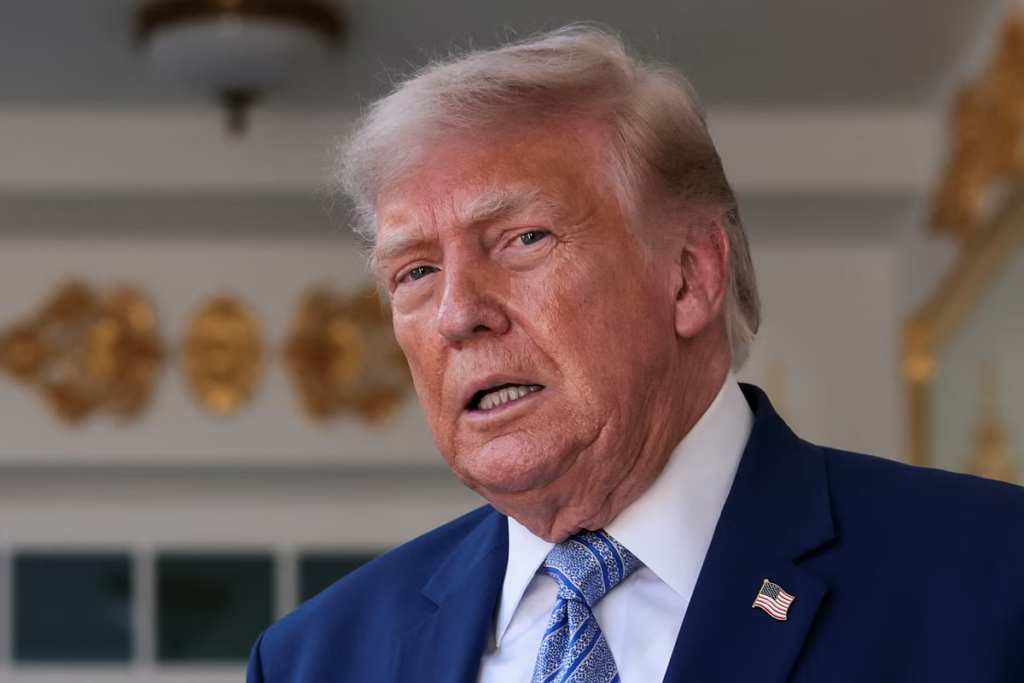
Following the renewed clashes, U.S. President Donald Trump called for an immediate halt to the fighting between Israel and Iran, urging restraint from both sides.
Shortly afterward, Iran’s joint military command announced it was suspending offensive operations, while warning that any further “aggression and hostile acts,” including those involving Israel and its allies in southern Lebanon, would be met with “much more severe and crushing measures than before.”
Israeli Prime Minister Benjamin Netanyahu, in a televised statement, suggested that the latest round of fighting had effectively concluded but cautioned that Israel would respond forcefully if Iran resumed attacks. He reaffirmed Israel’s continued military operations in Lebanon against Hezbollah, the Iran-backed militant group, emphasizing Israel’s “full right to self-defense.”
Despite the temporary de-escalation, tensions remain high on the ground. The Lebanese Health Ministry reported multiple casualties from Israeli airstrikes on Monday, including seven killed in Zefta—among them a Syrian child—and five killed in a separate strike on the coastal city of Tyre, which also wounded several members of the Lebanese Red Cross.
Both Israel and Iran have also begun lifting some emergency restrictions imposed during the fighting. Israeli authorities said most schools that had been closed would reopen, while Iran’s Mizan news agency reported the lifting of airspace restrictions affecting civilian flights.
During the ceasefire period, Iran has maintained its control over the strategic Strait of Hormuz, a vital global energy shipping route. Meanwhile, Israel has continued operations against Hezbollah positions in Lebanon, underscoring that despite the lull in direct exchanges, underlying tensions in the region remain unresolved.