 11
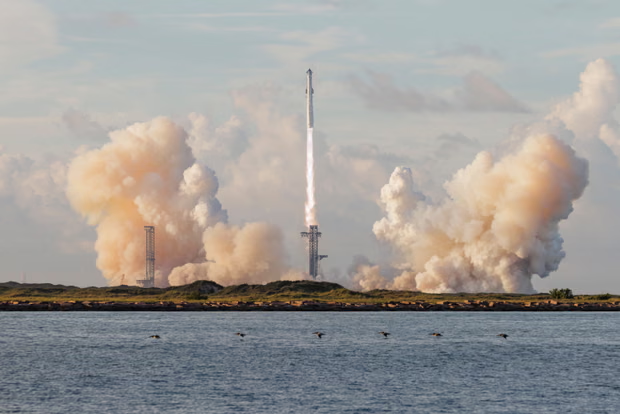
STARBASE: SpaceX’s Starship rocket reached Earth orbit for the first time on Monday, marking a major milestone in the company’s development of a fully reusable launch system intended for future missions to the Moon and Mars.
The uncrewed Starship lifted off from SpaceX’s Starbase facility in southern Texas on its 14th full-scale test flight. The 40-storey vehicle successfully reached an orbital trajectory despite an engine shutting down earlier than planned during the ascent.
Mission controllers initially indicated that the engine failure could prevent the spacecraft from reaching orbit. Engineers subsequently determined that the vehicle retained sufficient capability to carry out the critical engine burn required to enter orbit, allowing the mission to proceed.
Starship was designed to reach an altitude of about 275 kilometres and complete a series of orbits around Earth. The original mission plan called for approximately six orbits over nearly 10 hours before a controlled splashdown in the Pacific Ocean west of Chile.
The mission also carried 26 next-generation Starlink satellites, which SpaceX plans to deploy as part of its effort to expand and upgrade its satellite internet network. Three satellites were equipped with cameras intended to collect data on the spacecraft’s heat shield for future missions.
The achievement represents an important step for SpaceX’s plans to use Starship for large-scale satellite launches and future human spaceflight. NASA is also developing missions under its Artemis programme that could involve Starship as a lunar landing vehicle.
Starship, standing about 124 metres tall, is designed to be fully reusable, with SpaceX seeking to reduce launch costs and increase the frequency of missions. Previous full-scale test flights since 2023 had remained on suborbital trajectories, making Monday’s orbital flight a significant development in the programme.
SpaceX has spent years developing the vehicle and has conducted a series of increasingly ambitious tests, several of which encountered technical failures. The latest flight was intended to demonstrate the spacecraft’s ability to achieve orbit, deploy payloads and provide data needed for subsequent missions.