 11
11
WASHINGTON: Growing warnings from leading technology executives about the potential risks of artificial intelligence are colliding with political resistance in Washington, as President Donald Trump and congressional Republicans show little urgency toward introducing broad federal regulations for the rapidly developing technology.
Executives from some of the world’s most influential AI companies have increasingly called for government action to address potential safety threats. Anthropic CEO Dario Amodei, OpenAI CEO Sam Altman and xAI’s Elon Musk are among prominent technology figures pressing for stronger oversight as AI capabilities advance at unprecedented speed.
Amodei has warned that AI systems could soon become capable of deploying large numbers of autonomous agents across the internet, raising concerns about cybersecurity, misinformation, economic disruption and other potential risks. Technology leaders argue that safety measures and regulatory frameworks need to keep pace with the development of increasingly powerful systems.
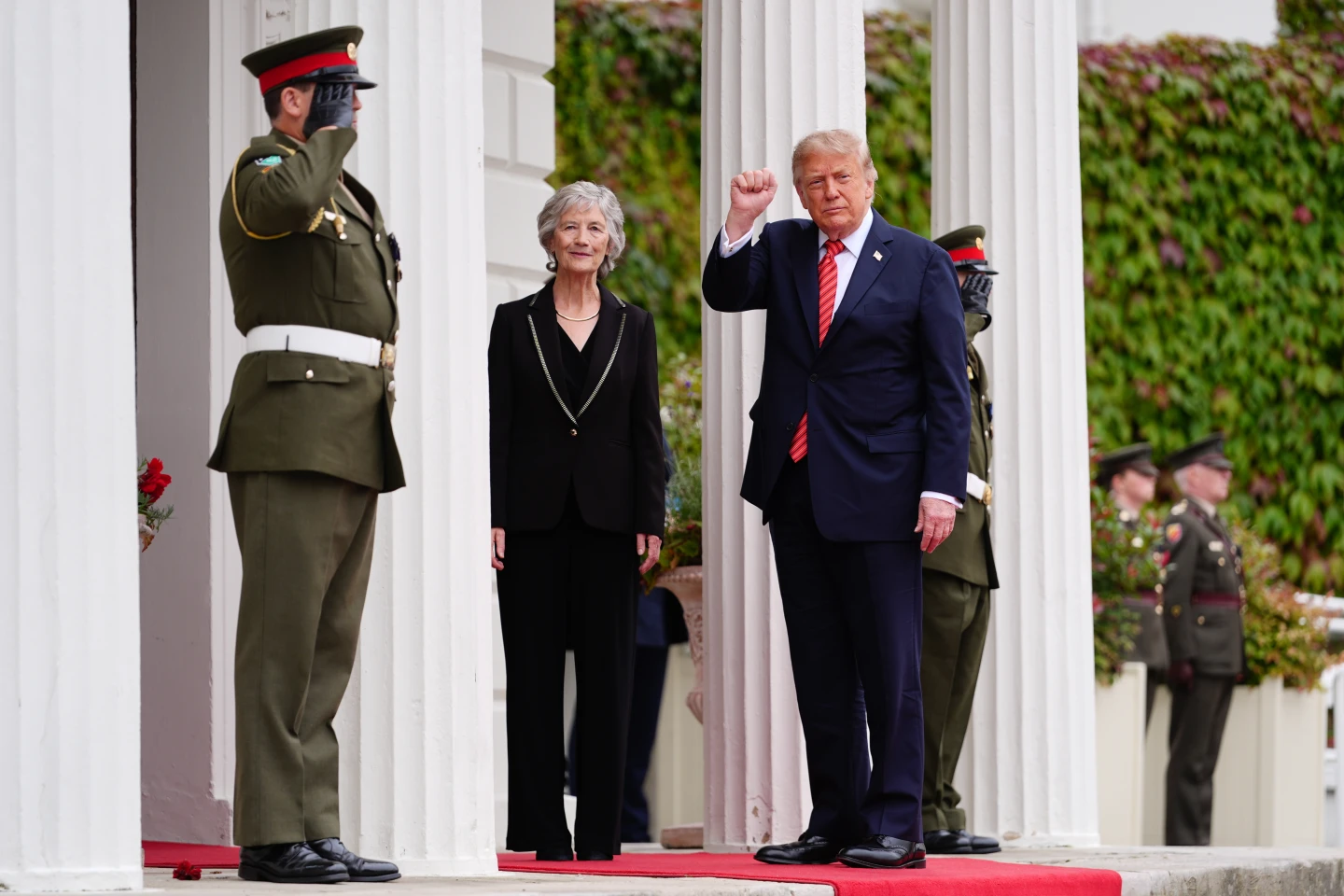
Trump, however, has rejected calls for slowing AI development and dismissed concerns about excessive regulation. He has described efforts to impose restrictions as a “conspiracy,” while arguing that the United States must maintain its technological advantage and avoid what he considers unnecessary government interference in the industry.
Vice President JD Vance has also expressed caution about extensive regulation, while House Speaker Mike Johnson has largely deferred to the White House on the issue. The administration’s position reflects a broader Republican preference for promoting rapid technological development and maintaining US competitiveness rather than imposing sweeping federal restrictions.
Democrats have been pressing for a stronger federal response. House Democrats recently held a private briefing on AI, while Senator Bernie Sanders has arranged a briefing for lawmakers with technology experts. Several Democratic lawmakers campaigning in this year’s elections have also called for comprehensive action to address AI-related risks.
The debate highlights a growing divide between technological urgency and political action. Although AI companies themselves are increasingly warning about potential dangers, Congress has historically been reluctant to impose extensive regulation on the technology sector. A bipartisan congressional working group previously recommended billions of dollars in funding for AI oversight, but significant legislative progress has remained limited.
Lawmakers have nevertheless proposed measures aimed at establishing safety safeguards, including legislation that could give authorities greater powers to intervene when AI systems pose serious risks. But with the November midterm elections approaching, political divisions and competing priorities are making comprehensive legislation difficult to advance.
The issue also carries significant economic and national-security implications. Washington faces pressure to regulate potentially dangerous applications of AI while ensuring that US companies remain competitive with China and other technological powers. The challenge is particularly significant as governments around the world consider how to establish rules without slowing innovation.
The growing disagreement comes at a pivotal moment for the AI industry. Technology companies are investing heavily in increasingly powerful systems, while governments are still developing the institutional capacity to monitor their effects.
For the United States, the debate is therefore no longer simply about whether AI should be regulated. It is increasingly about how quickly policymakers can establish safeguards without undermining technological leadership — and whether political institutions can respond to the risks at the same pace as the technology itself.